Roundtable meeting of the “Digitalisation of the Study Process” project concluded: needs of Latvia’s higher education institutions identified
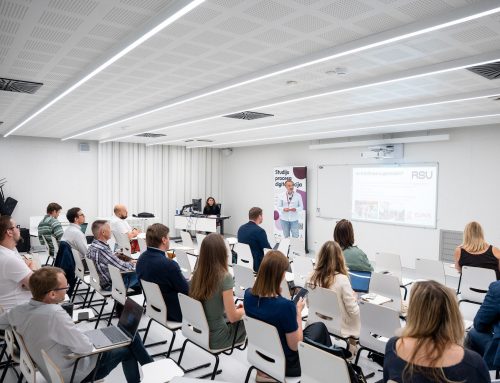
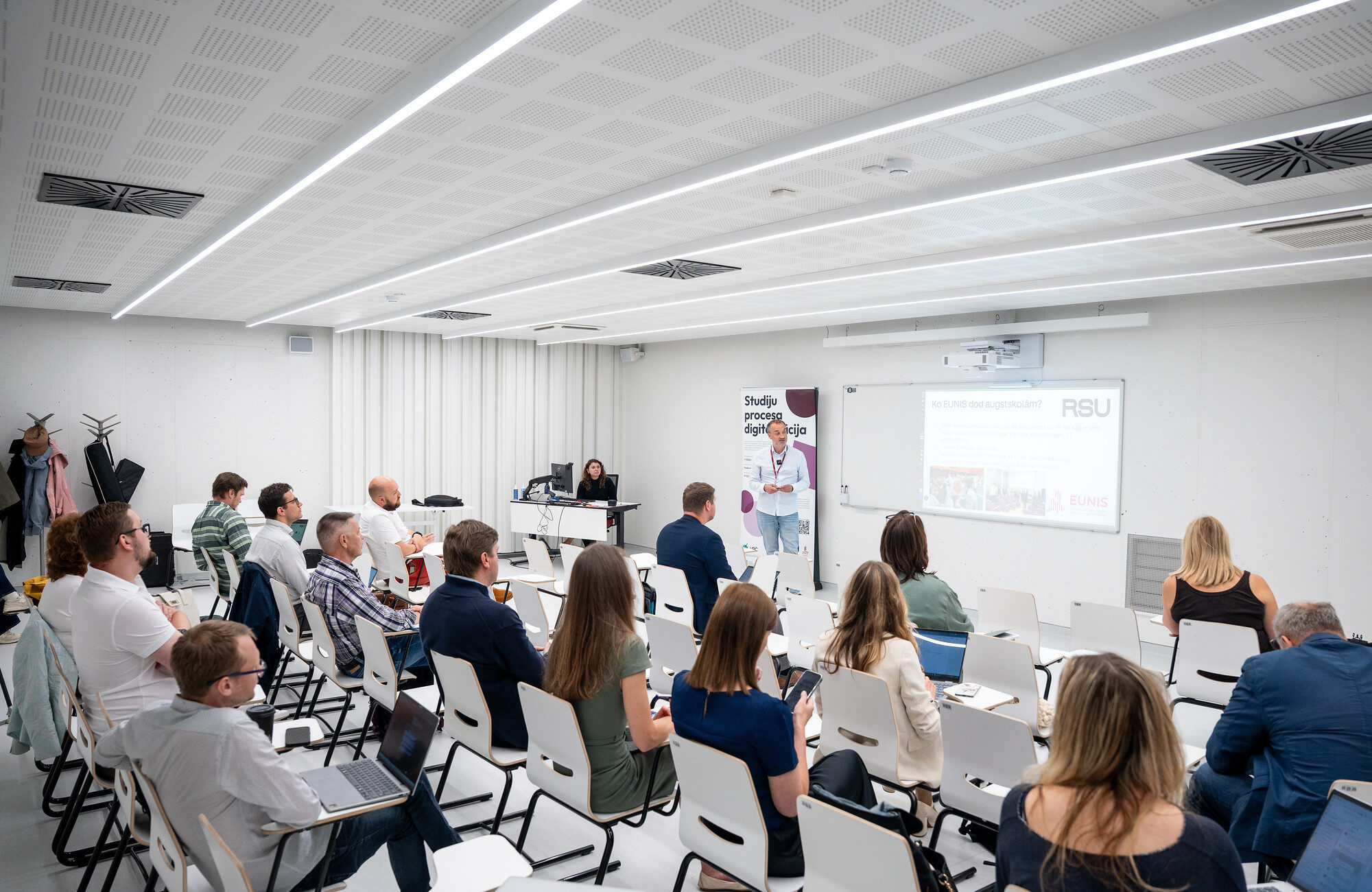
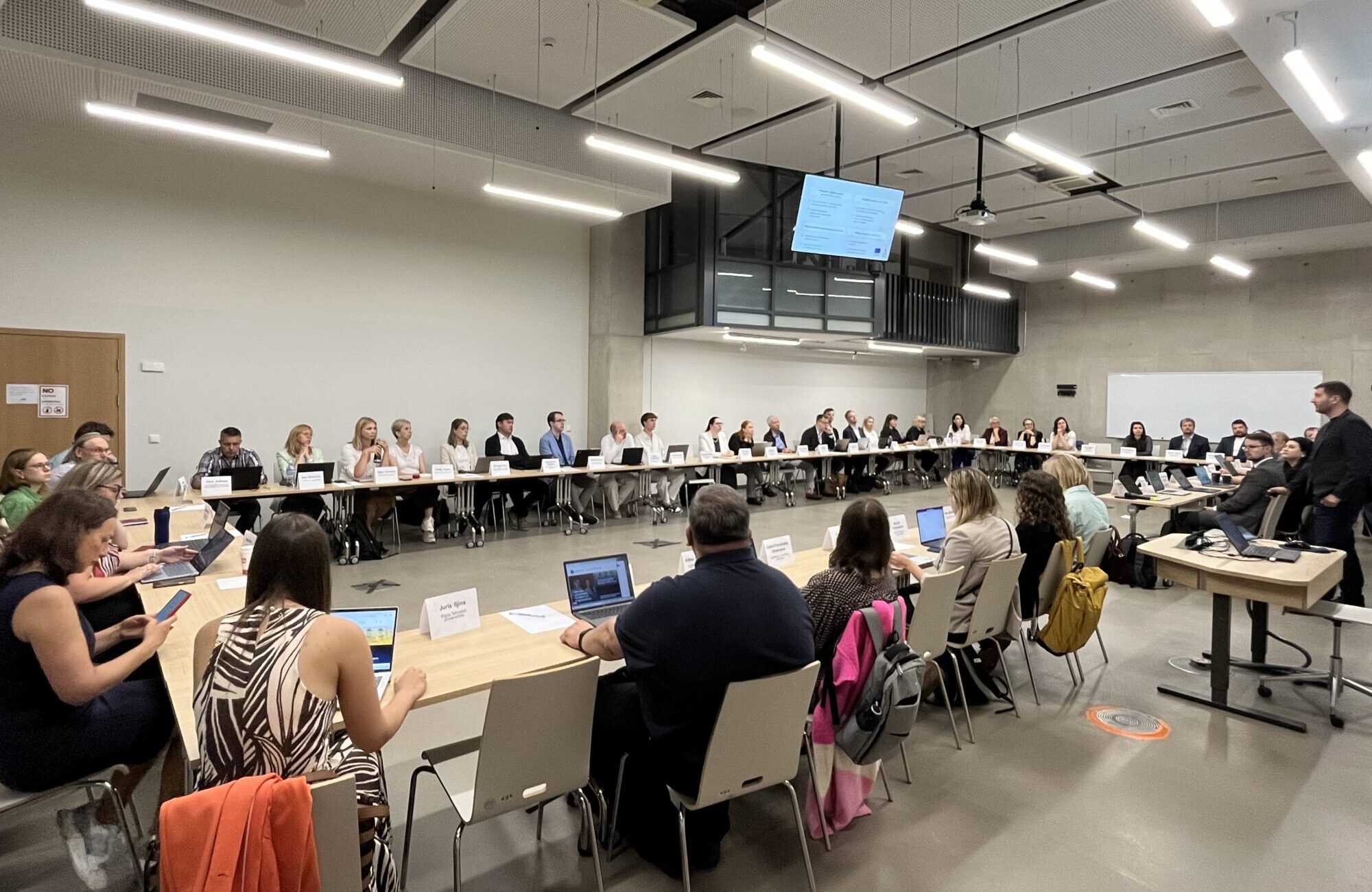
On 2 July 2026, the roundtable meeting of the project Digitalisation of the Study Process (No. 4.2.2.11/1/25/I/001) took place, attended by 53 participants from almost all of Latvia’s higher education institutions (HEIs). The aim of the meeting was to identify the real needs and challenges of HEIs in digitalising the study process, to foster understanding of the project’s second round, and to encourage the formation of consortia for its implementation. At the meeting, 32 universities and colleges presented their needs, planned solutions and prerequisites for successful participation in the project’s second round.
The central part of the meeting consisted of presentations by universities and colleges, in which each institution introduced its needs, planned solutions and prerequisites for successful participation in the project’s second round. The collated results provide the most complete picture to date of the digitalisation needs of Latvia’s higher education sector.
Key conclusion: SIS modernisation is a universal need. Almost all HEIs pointed to the need to modernise their study information system (SIS) and to digitalise study processes, as many institutions still use the Latvian Higher Education Institutions Information System (LAIS) or fragmented, partly manual solutions. This result confirms that the project’s move towards a shared SIS solution corresponds to the sector’s actual needs.
Among the needs most frequently mentioned by HEIs were also:
- Reducing the administrative burden and automating processes — easing routine tasks and the preparation of certificates and reports;
- Data exchange with state information systems and shared registers — automatic, standardised data transfer without manual entry;
- Electronic document circulation — e-files, e-documents and digital signatures throughout the full study cycle;
- System integration and the elimination of duplicate data entry;
- Development of staff digital competencies;
- Scheduling of classes, rooms and resources, data analytics for quality management, as well as the inclusion of lifelong learning programmes, cybersecurity, and the introduction of artificial intelligence solutions.
Prerequisites for successful implementation. When it came to what is needed for the successful implementation of solutions, the most frequently mentioned were cooperation partners and the formation of consortia — especially for smaller institutions whose number of students does not allow them to submit an individual project. HEIs also pointed to a shortage of human resources and IT specialists, the need for training and user support, and a desire for clarity regarding the rules of the second round, the chosen solutions, and their implementation and maintenance costs. Also essential are technical requirements and guidelines made available in good time, technical support for data migration and integration, regular communication with the project implementer and partners, and the adaptation of solutions to institutions’ specific needs. Several HEIs emphasised the need for a sustainable maintenance and financing model after the project’s conclusion.
Next steps. The needs gathered at the meeting will serve as the basis for defining the priorities of the project’s second round and for forming consortia. Within the first round, the project implementer will provide support to all HEIs in forming consortia — coordination, information and consultation during the project preparation stage.
____________________________________________________________________________________________________________
This activity is part of a project co-financed by the European Social Fund and the state (No. 4.2.2.11/1/25/I/001). Its aim is to introduce modern shared solutions that will ensure a flexible study process and enhance the competitiveness of Latvia’s higher education institutions. The project is implemented by the association Higher Education and Science Information Technology Shared Services Centre in cooperation with the science universities: the University of Latvia, Riga Technical University, Rīga Stradiņš University, and the Latvia University of Life Sciences and Technologies.